Write for the next welcome
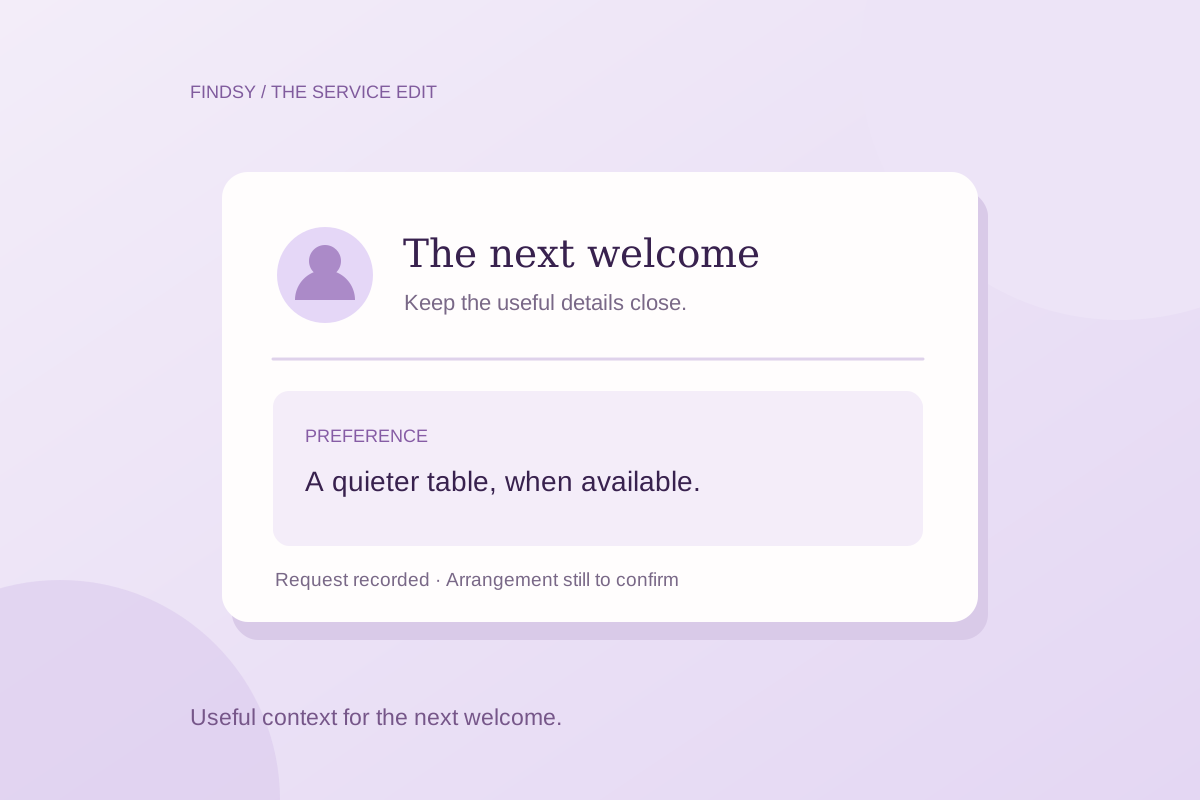
Ask what the team needs to do differently. “Guest requested a quieter table for this visit” gives the host something practical to review. Keep the request distinct from a guarantee that a particular table will be available.
Use concise language. A long account of a conversation can hide the single detail that matters for service.
Keep the source and context clear
Distinguish something the guest supplied from a staff observation or an unverified assumption. Include the relevant visit or date where needed, so an old preference does not silently become a permanent fact.
When a detail is uncertain, the next step may be to confirm it with the guest. Recording more confidently than the evidence allows can make the next interaction harder.
Collect only what serves a purpose
Keep notes relevant to hospitality and the upcoming visit. Avoid speculative, derogatory or unnecessary personal detail. Consider whether a temporary request belongs on one reservation rather than in a lasting guest profile.
Dietary, allergy and accessibility information needs the restaurant's appropriate review and access controls. Recording a request does not confirm that the restaurant can accommodate it.
Review who can see it
The person greeting a guest may need a practical service instruction without seeing every internal recovery note. Review staff roles and the information appropriate to each workspace.
At handover, use the smallest useful summary and retain the fuller context in its appropriate place.
How this connects to Findsy
Findsy keeps useful history, preferences and service context close to the guest and booking, with access and optional features governed by the venue's setup. Advanced visit-preparation and party-sharing features need separate availability confirmation.
Take it into your next briefing
Your guest-note standard
Work through the actions here, or take a copy for your team. Progress and planning notes reset when you leave or reload this page.